Whatsapp
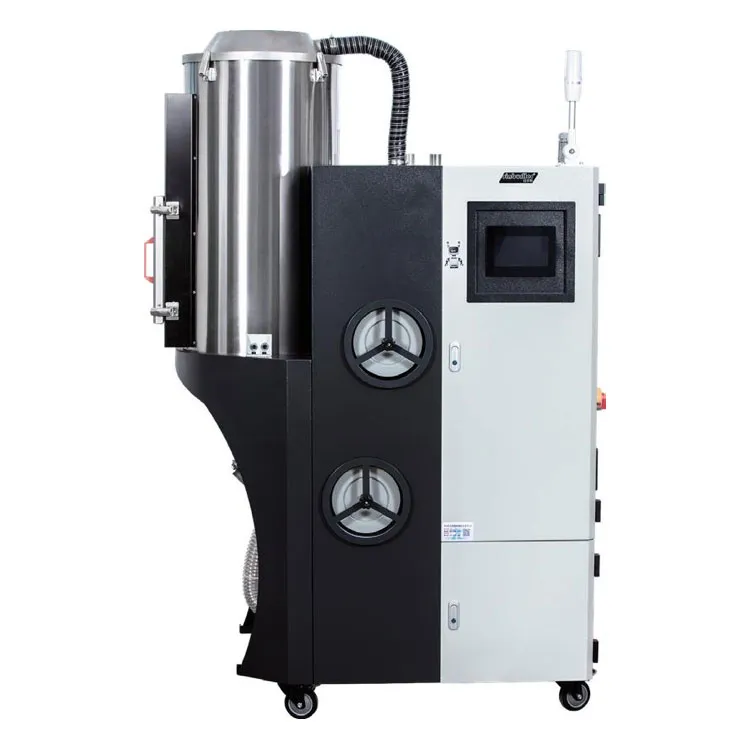
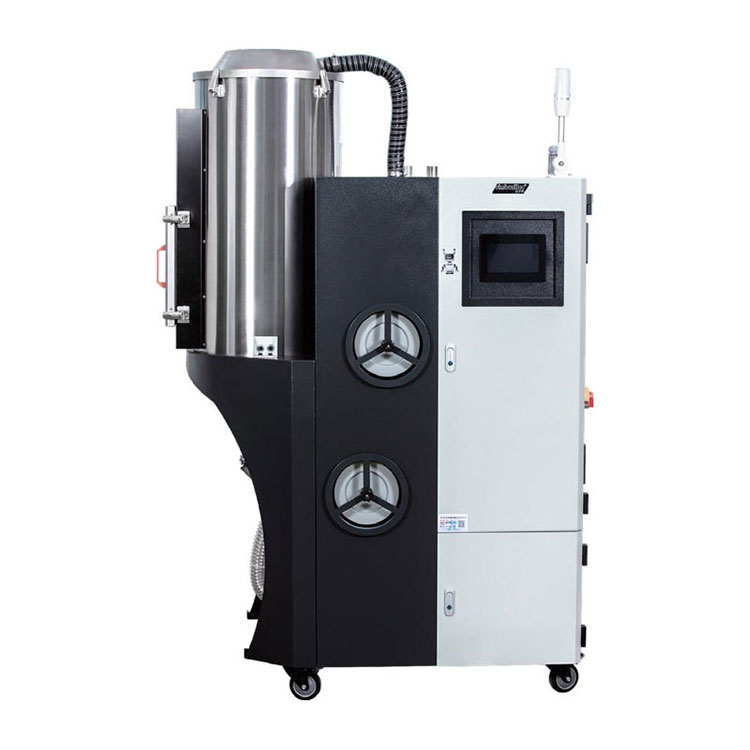
In plastic injection molding, moisture is a silent quality killer. Engineering plastics such as PA, PET, PC, and PBT are highly hygroscopic—they absorb moisture from the air and release it during processing, causing hydrolysis, splay marks, brittleness, and reduced mechanical properties. Traditional hot-air dryers often fail to achieve the low moisture levels required for these materials. The Dehumidification Feed Dryer from Sinburller addresses this challenge by combining dehumidification, drying, and feeding into a single integrated system. Featuring a molecular sieve honeycomb rotor that delivers stable dew points below -40°C, this equipment ensures consistent material quality before it enters the molding process. This article examines the technology behind the system, its key performance features, and the practical benefits it brings to plastic processing operations.
Many engineering plastics are hygroscopic by nature. They absorb moisture from ambient air during storage and handling, and when heated to processing temperatures, that moisture turns into steam. The result is a range of defects: splay marks on the surface of molded parts, reduced impact strength, and in severe cases, hydrolytic degradation of the polymer chains. For manufacturers producing precision components for automotive, electronics, or medical applications, these defects are unacceptable. Traditional hot-air dryers are often insufficient for materials that require dew points below -20°C. They can also over-dry materials if not carefully controlled, leading to yellowing, brittleness, or clumping.
The Dehumidification Feed Dryer from Sinburller offers a more reliable approach. The system uses a molecular sieve honeycomb rotor that continuously removes moisture from the drying air, delivering a stable dew point of -40°C or lower. This ensures that even the most moisture-sensitive materials are processed under optimal conditions. By integrating drying, dehumidification, and feeding into one unit, the system also simplifies material handling and reduces the risk of re-absorption between drying and molding.
At the heart of the Dehumidification Feed Dryer is the molecular sieve honeycomb rotor—a technology that sets it apart from conventional desiccant dryers. Unlike dual-tower desiccant systems that alternate between drying and regeneration, the honeycomb rotor operates continuously. A portion of the rotor is actively drying the process air while another portion is being regenerated, ensuring a constant supply of low-dew-point air without the pressure and temperature fluctuations that can occur with tower systems.
The rotor is constructed from a ceramic or fiber substrate impregnated with molecular sieve material, which has a high affinity for water molecules. As process air passes through the rotor, moisture is adsorbed onto the molecular sieve, and dry air exits at a dew point below -40°C. A separate regeneration air stream heats the rotor to release the trapped moisture, which is then exhausted. This continuous cycle provides stable, predictable drying performance, eliminating the risk of dew-point spikes that can compromise material quality. The system also avoids the aging and contamination issues associated with the desiccant beads used in conventional dryers.
The equipment combines three essential functions—dehumidification, drying, and feeding—into a single integrated system, simplifying material handling and reducing the footprint required on the production floor.
| Function | Description |
| Dehumidification | Molecular sieve honeycomb rotor provides stable low-dew-point air (below -40°C) for effective moisture removal from hygroscopic materials. |
| Drying | Insulated drying hopper with bottom-blowing duct design ensures even heat distribution and prevents heat loss, improving drying efficiency. |
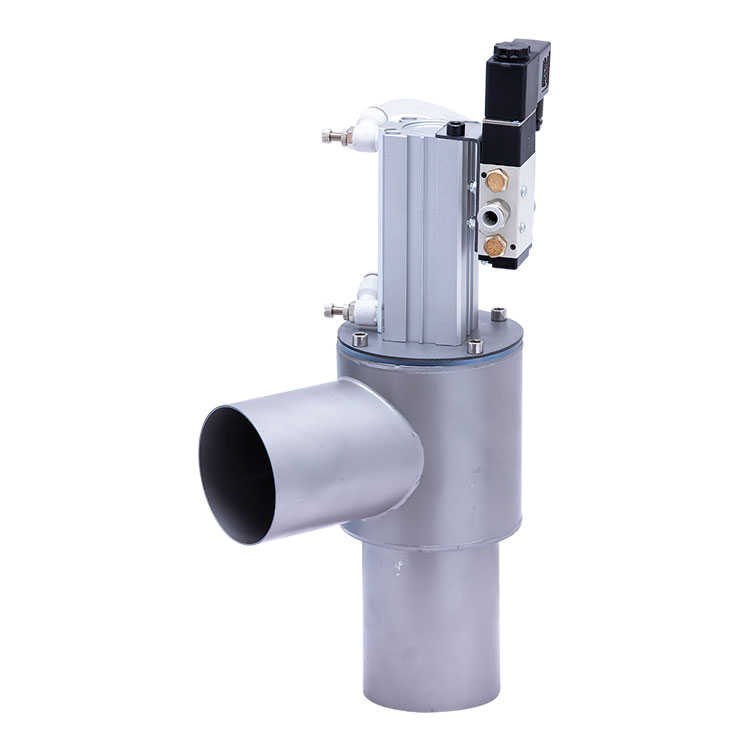
| Feeding | Integrated feeding system with cut-off valve ensures no residual material remains in pipelines, preventing re-absorption of moisture after drying. |
The drying hopper is insulated and features a bottom-blowing duct design that directs heated air evenly through the material bed. This ensures uniform drying and prevents channeling, which can leave some material under-dried while other portions are over-dried. The feeding system includes a cut-off valve that stops material flow when the hopper is full, preventing residual material from sitting in the pipeline and re-absorbing moisture before reaching the molding machine.
The Dehumidification Feed Dryer incorporates several features that contribute to its performance and reliability in industrial applications.
• Stable low-dew-point air – The molecular sieve rotor delivers a consistent dew point below -40°C, ensuring effective drying of moisture-sensitive materials such as PA, PET, PC, and PBT. Unlike conventional dryers that can experience dew-point fluctuations, this system maintains stable conditions throughout the drying cycle.
• Quantitative drying control – The system allows operators to adjust the material level sensing switch based on actual startup conditions, preventing over-drying. Over-drying can cause yellowing, brittleness, clumping, and increased energy consumption—issues that are avoided with precise level control.
• Insulated drying hopper – The hopper is double-walled with insulation to minimize heat loss, reducing energy consumption and maintaining consistent drying temperatures. The bottom-blowing duct design ensures even air distribution across the material bed.
• Full-function alarm system – The control panel includes a comprehensive alarm system that immediately reflects any failure, allowing operators to respond quickly and minimize downtime.
• LCD touchscreen control – The machine is equipped with a user-friendly touchscreen interface that simplifies operation and monitoring. Operators can view and adjust parameters such as temperature, dew point, and drying time with ease.
The following table summarizes the key specifications for the Dehumidification Feed Dryer from Sinburller, covering the XD series models.
| Parameter | 40U/50H | 80U/90H | 120U/90H | 160U/120H | 230U/150H | 300U/200H | 450U/300H | 600U/400H |
| Insulation Barrel Capacity (L) | 40 | 80 | 120 | 160 | 230 | 300 | 450 | 600 |
| Drying Heating Power (kW) | 3 | 4 | 4 | 6 | 6 | 12 | 12 | 18 |
| Regenerative Heating Power (kW) | 3 | 3 | 3 | 3 | 3 | 4 | 4 | 7.2 |
| Dehumidification Air Volume (m³/hr) | 40 | 90 | 90 | 120 | 150 | 200 | 300 | 400 |
| External Size L×W×H (mm) | 1081×903×1685 | 1320×820×1950 | 1320×820×2050 | 1520×820×2050 | 1520×820×2200 | 1600×1100×2160 | 1600×1100×2300 | 2380×1745×1255 |
| Net Weight (kg) | 295 | 325 | 340 | 405 | 430 | 560 | 595 | 650 |
The range of models covers capacities from 40 liters to 600 liters, accommodating different production volumes and material throughput requirements. This allows manufacturers to select a system that matches their specific needs without oversizing or under-sizing the equipment.
The equipment is suitable for a variety of plastic processing applications:
• Automotive parts manufacturing – Dries engineering plastics such as PA and PBT used in under-hood components, connectors, and interior parts where moisture-induced defects would compromise safety and performance.
• Electronics and electrical components – Ensures consistent drying of PC, PET, and other materials used in housings, connectors, and insulating parts where dimensional stability and dielectric properties are critical.
• Packaging and containers – Handles PET and other materials used in preform and container production, where moisture can affect clarity and mechanical strength.
• Medical device manufacturing – Provides reliable drying for materials used in medical components where purity and mechanical properties are essential.
• Consumer goods – Used in the production of appliance parts, housewares, and other molded products where appearance and performance depend on proper drying.
The system's ability to handle a wide range of hygroscopic materials makes it a versatile addition to injection molding facilities across these sectors.
A: The dryer is suitable for hygroscopic engineering plastics such as PA (nylon), PET, PC, PBT, and other materials that require low dew-point drying to achieve optimal processing results.
A: The molecular sieve honeycomb rotor provides a stable dew point of -40°C or lower, ensuring effective moisture removal for even the most demanding materials.
A: The feeding system includes a cut-off valve that stops material flow when the hopper is full, preventing residual material from remaining in the pipeline and re-absorbing moisture. This ensures that material reaching the molding machine is at the correct moisture level.
A: The honeycomb rotor operates continuously, providing stable dew-point air without the pressure and temperature fluctuations that can occur with dual-tower systems that alternate between drying and regeneration. It also avoids the aging and contamination issues associated with desiccant beads.
A: Yes, the system can be configured with different hopper capacities and auxiliary equipment to meet specific production requirements. Contact the Sinburller sales team to discuss your needs.
A: Sinburller offers 24-hour quick response service, on-site installation, and ongoing technical support. Spare parts are available for all models.
The Dehumidification Feed Dryer from Sinburller provides a practical, integrated solution for moisture control in plastic processing. Its molecular sieve honeycomb rotor delivers consistent low-dew-point air, while the integrated feeding system and insulated drying hopper ensure efficient, uniform drying. With a range of capacities to suit different production volumes, the equipment meets the needs of manufacturers processing hygroscopic materials across automotive, electronics, packaging, and medical sectors. For inquiries about technical specifications, pricing, or to discuss your drying requirements, the Sinburller team is available to provide detailed product information and professional support tailored to your needs.
-